
SPECIFICATION GUIDE
How to Choose Metal Cladding Thickness: 16 mm, 25 mm, 50 mm, or 100 mm?
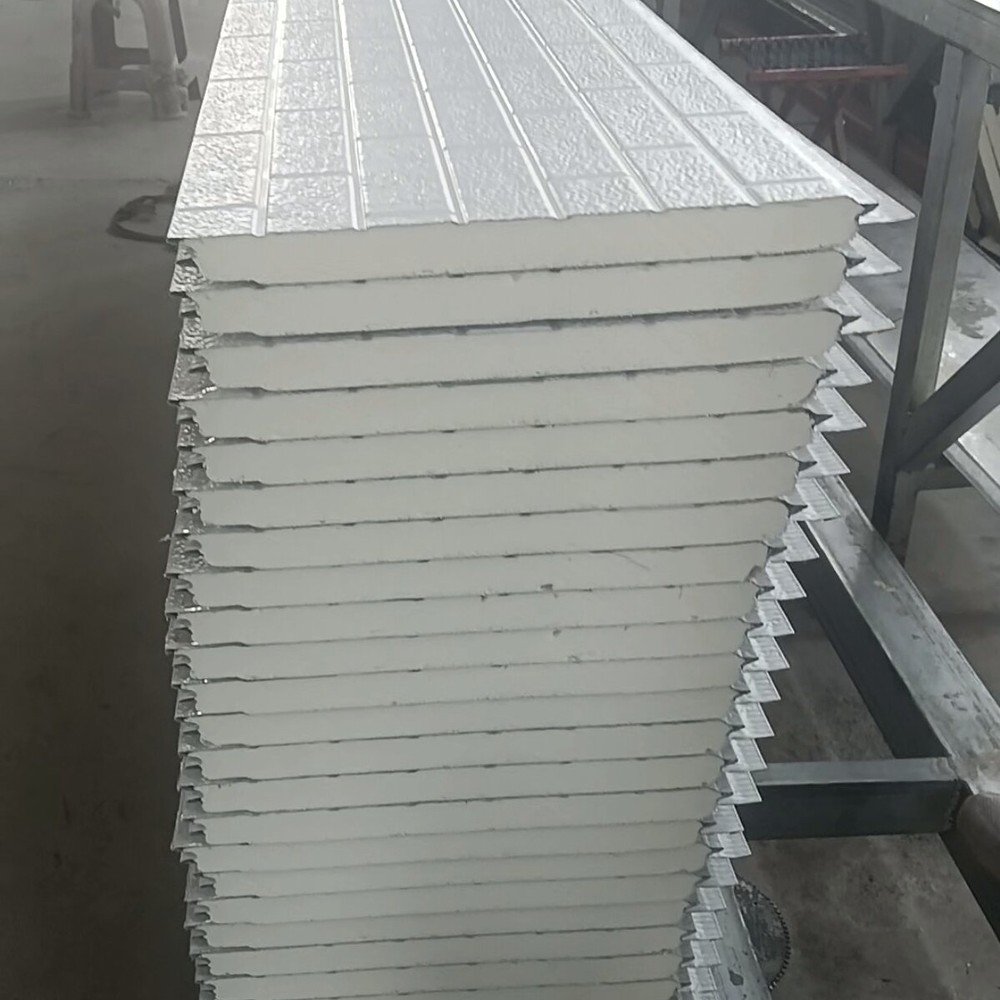
Because our continuous lines emboss decorative wood, brick, and stone patterns across 10 mm to 100 mm boards, buyers need a clear way to balance insulation gain against window-reveal depth and shipping volume.
On this page
Most buyers first discover embossed insulated metal siding in standard 16 mm thickness. That single thickness covers a huge share of garden rooms, container homes, and budget renovations – but specifying 16 mm blindly on a heated northern European house often disappoints, while specifying 100 mm on a garden shed wastes both panel budget and sea freight.
What each thickness tier actually delivers
| Thickness | Approx. core R-value (PU @ 0.020 W/m.K) | 40HQ loading impact | Typical project match |
|---|---|---|---|
| 10 mm | ~0.50 m2.K/W | Highest m2 per container | Interior decorative walls, dry partitions |
| 16 mm | ~0.80 m2.K/W | 3,200 – 3,800 m2 per 40HQ | Garden sheds, guard booths, prefab cabins, facade refresh over insulated walls |
| 20 – 25 mm | ~1.00 – 1.25 m2.K/W | ~2,200 – 2,800 m2 per 40HQ | Deeper joint rigidity for residential over-cladding and mild-winter homes |
| 30 – 50 mm | ~1.50 – 2.50 m2.K/W | ~1,100 – 1,800 m2 per 40HQ | Colder European renovations, year-round modular villas, commercial facades |
| 75 – 100 mm | ~3.75 – 5.00 m2.K/W | ~550 – 850 m2 per 40HQ | High-insulation workshops, cold-climate envelopes, cold storage |
Two hidden factors buyers forget when sizing up thickness
1. Window and door trim depth
A 16 mm panel sits flush inside standard slim corner and window wraps. Once you step up to 50 mm or 100 mm panels, window sills and door reveals become noticeably deeper, so plan custom-bent flashing extensions and longer self-drilling screws in advance.
2. Freight cost per square meter
Insulated panels are light cargo – containers cube out on volume long before they hit weight limits. Doubling panel thickness from 16 mm to 30-32 mm cuts the square meters fitting inside a 40HQ roughly in half, which doubles ocean freight per square meter. Factor landed freight – not just FOB ex-factory price – when comparing thicknesses.
Quick selection checklist
- Check whether the existing wall already has cavity or internal insulation. If yes, 16-25 mm exterior cladding adds a continuous thermal break and weather finish at low freight cost.
- Check local building codes or subsidy rules if renovating a primary residence in the EU. Never assume 16 mm meets national residential wall U-value thresholds.
- Confirm outer steel gauge separately from foam thickness – a 50 mm panel with 0.21 mm steel still dents more easily than a 20 mm panel with 0.27 mm steel.