
WEATHER PROTECTION | 3.7 KG/M2 (16 MM) | 2.1-2.4% WATER ABSORPTION
Waterproof & Lightweight Exterior Wall Panels
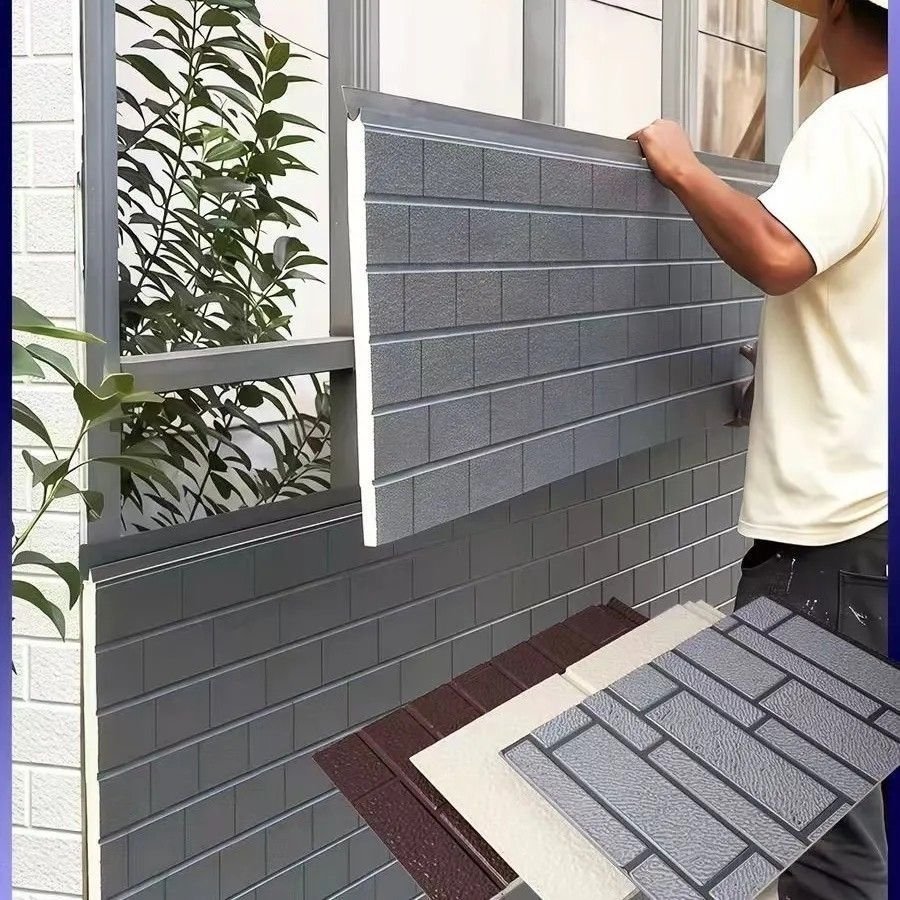
Three-layer exterior wall cladding engineered to shed wind-driven rain: non-porous Al-Zn coated steel face, closed-cell PU or EPS foam core, and moisture-barrier aluminum foil backing weighing just 3.7 kg/m2 in 16 mm thickness.
- Closed-cell PU core tested at 2.4% 24h water absorption (EPS 2.1%) under GB/T 23932
- Interlocking tongue-and-groove joints plus aluminum foil vapor barrier backing
- Lightweight ~3.7 kg/m² (16 mm) panels shed rain cleanly without heavy masonry load
Direct Factory · Shandong, China · 10-100 mm PU & EPS · CNAS Class B1 Tested · Free Cut Samples
On this page
How the panel handles exterior rain – and why rear ventilation still matters
From the outside, the pre-painted Al-Zn steel face is completely impervious to rainwater, freeze-thaw cracking, and splashback. Behind it, closed-cell PU foam tested at 2.4% 24-hour volume water absorption (and EPS at 2.1%, both well under the 4.0% / 3.5% GB/T limits) prevents capillary wicking into the wall.
Because the steel skin and back aluminum foil block vapor movement, true system waterproofing depends on two site practices: hanging panels female-groove-down with sealed corner trims, and mounting them over ventilated battens on damp brick or heated timber walls so interior vapor never condenses behind the panels.
Wall load comparison: lightweight metal panels vs. traditional exterior finishes
| Exterior wall system | Typical installed weight | Wet mortar / drying wait | Structural framing demand |
|---|---|---|---|
| Jiye 16 mm PU Metal Panel | 3.7 kg/m2 | None (dry screw-fix) | Light timber battens or thin steel studs |
| Jiye 50 mm Insulated Panel | ~6.0 – 6.8 kg/m2 | None (dry screw-fix) | Standard steel/timber framing |
| Fiber Cement Siding (8-10 mm) | 14 – 18 kg/m2 | No mortar, heavier lift | Heavier fasteners + separate insulation |
| Clay Brick Slip / Stone Veneer | 35 – 70 kg/m2 | Weather-sensitive adhesive/mortar | Structural ledger or reinforced backer |
Direct manufacturing in Shandong — verified numbers
Jinan Jiye Building Materials Co., Ltd. runs continuous one-step panel forming lines at our Zouping, Binzhou plant. Every panel ships with traceable coil batch records and stamped CNAS lab data.
10–100 mm
PU & EPS core thicknesses (383 mm cover width)
0.020 W/m·K
CNAS-tested PU thermal conductivity at 25°C
100+ Finishes
Embossed wood, brick, stone & fluted coil stock
3,800 m²
Max 16 mm panel loading per 40HQ container
Workshop checkpoints buyers ask to see
From pre-painted Al-Zn coil staging to double-belt curing and export container stuffing, our production line handles panels and matching trims under one roof.
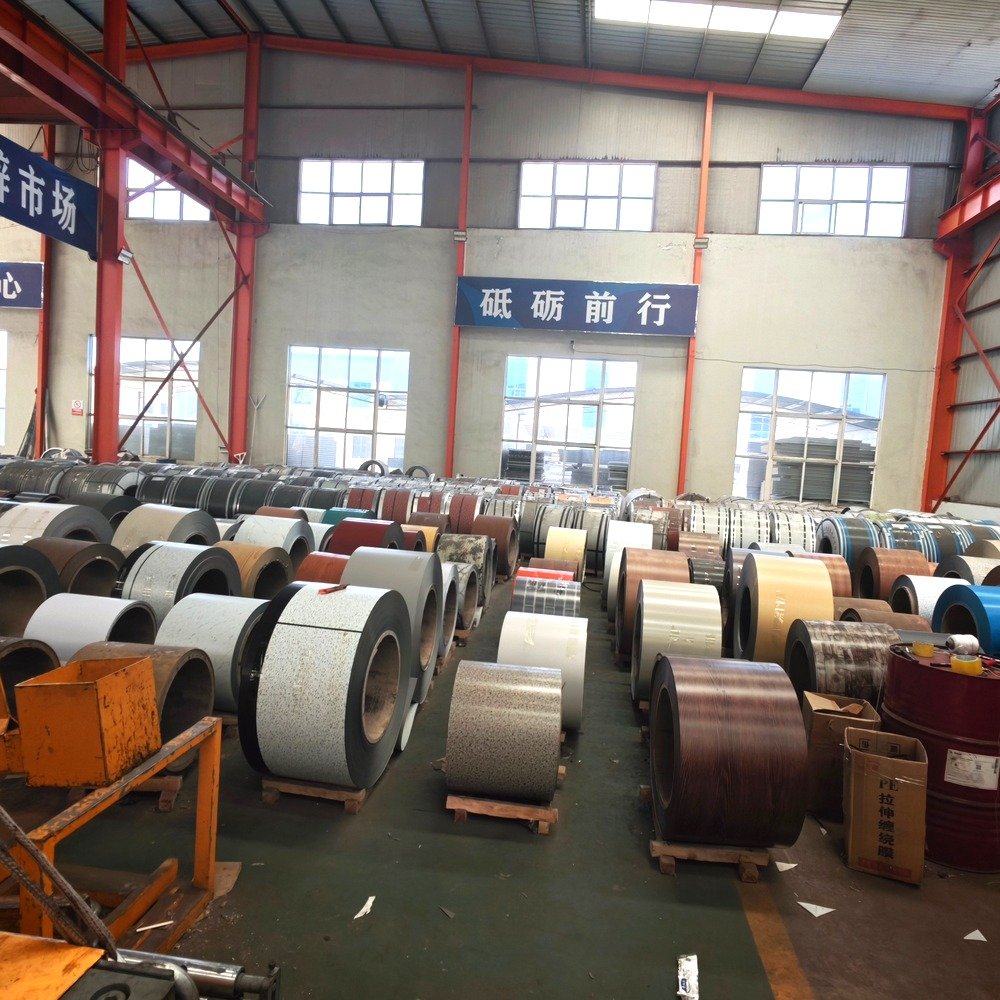
Coil inventory & embossing rollers
Pre-painted Al-Zn alloy steel coils (0.21 mm, 0.23 mm, and 0.27 mm) and 304 stainless steel stock feed dedicated brick, wood grain, fluted, and stone roller dies. Tested coating mass: 105 g/m2 front Al-Zn (min point 92 g/m2). Steel gauges: 0.21 / 0.23 / 0.27 mm (customizable).
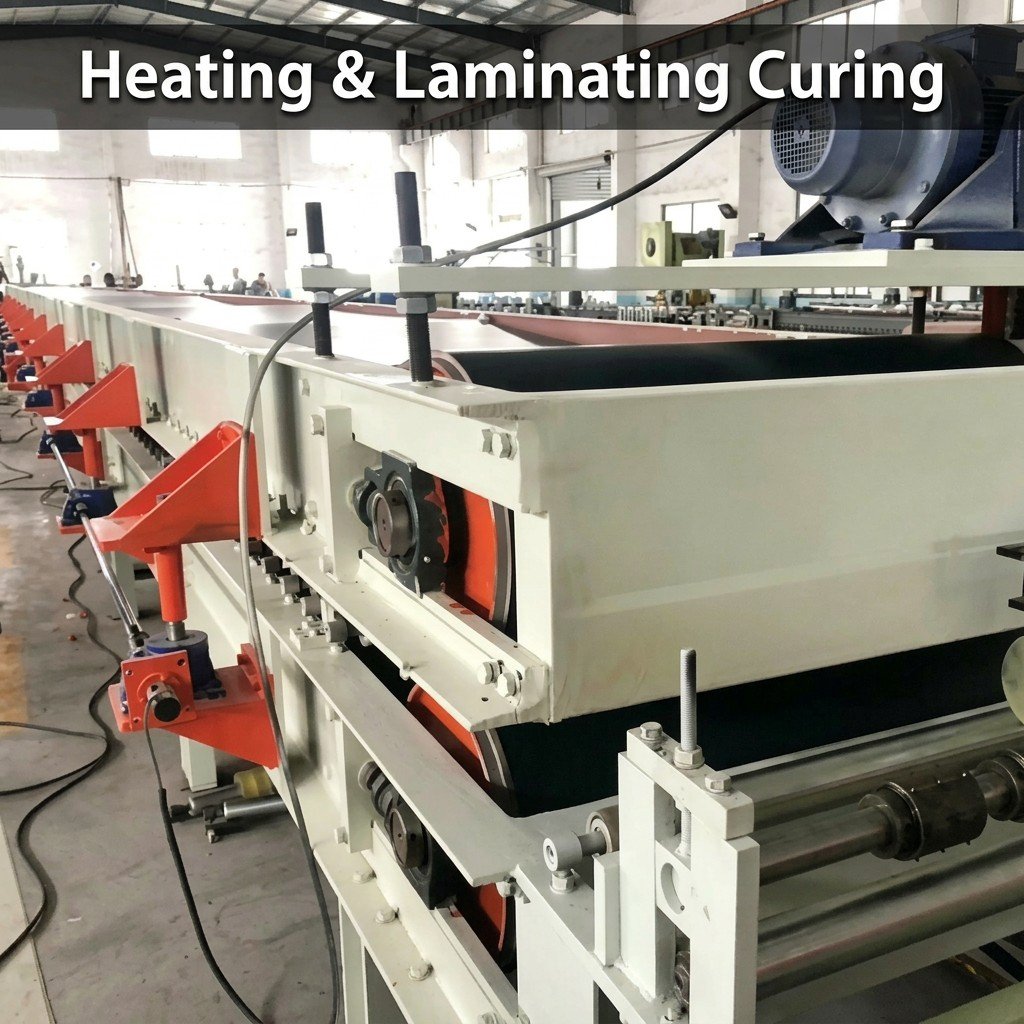
Double-belt heating & curing
Heated laminating belts hold panel flatness while the PU foam expands and bonds to both the embossed steel face and the moisture-barrier foil backing. Measured bond strength: 0.16 MPa (PU) / 0.15 MPa (EPS). Dimension tolerance: Length -1 mm, width +1 mm, thickness +0.5 mm.
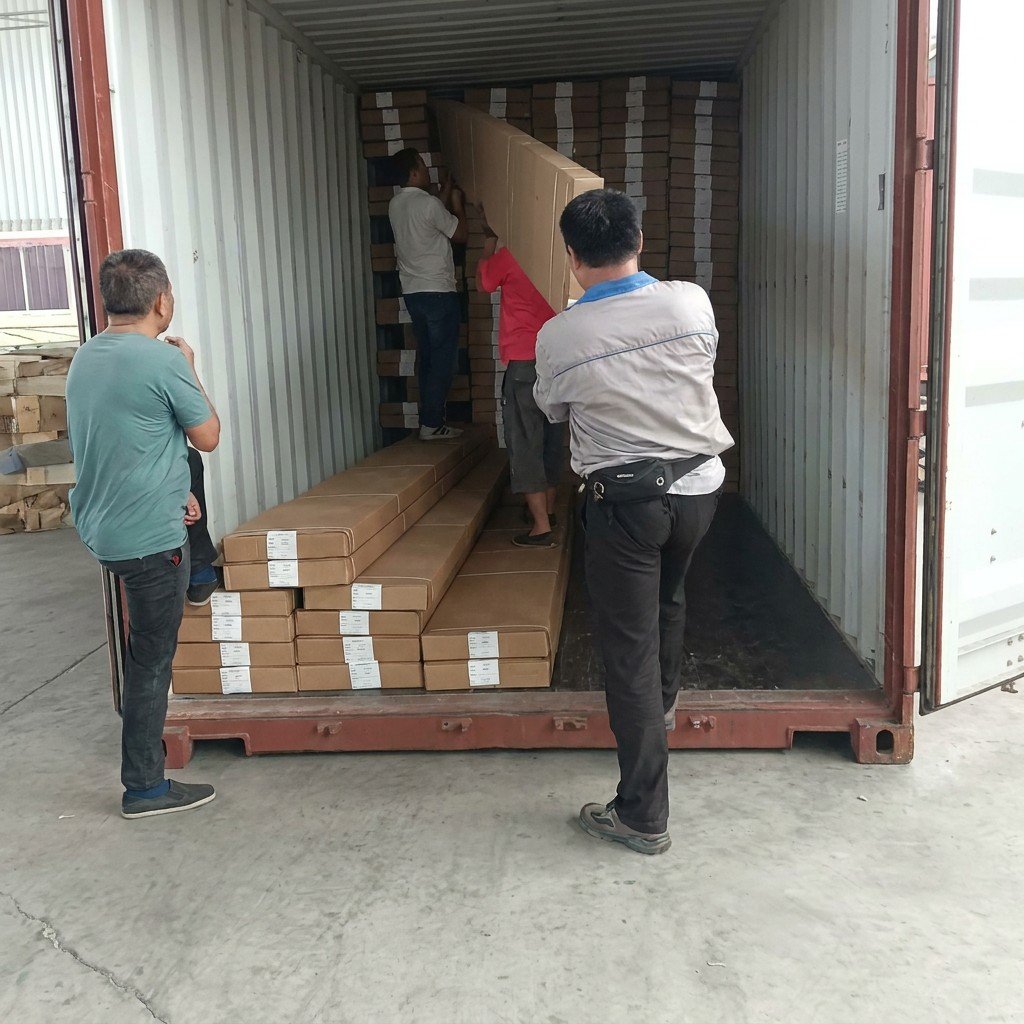
Carton packing & container loading
Standard 16 mm panels pack 10 pieces per labeled export carton (4000 x 420 x 160 mm for 4 m boards) or cut to 2.9 m / 3.8 m / 5.8 m lengths to optimize container cube. 20GP capacity (16 mm): Approx. 1,300 to 1,500 m2. 40HQ capacity (16 mm): Approx. 3,200 to 3,800 m2.
Third-party CNAS / ilac-MRA test summary (Report ZJTB3307037563GR)
Independently measured by Hunan TECC Testing Co., Ltd. (CNAS L23527 / ilac-MRA accredited) on July 10, 2026 using 0.21 mm Al-Zn faced exterior wall panels under GB/T 23932-2025, JG/T 287-2013, and GB 8624-2012. Full 10-page stamped bilingual PDF report available on request.
| Test item | PU core result | EPS core result | Reference standard |
|---|---|---|---|
| Apparent core density | 43 kg/m3 (req >= 38) | 22 kg/m3 (req >= 18) | GB/T 23932-2025 / GB/T 10801.1-2025 |
| Thermal conductivity at 25 C | 0.020 W/(m.K) (req <= 0.024) | 0.033 W/(m.K) (req <= 0.039) | GB/T 23932-2025 / GB/T 10801.1-2025 |
| Compressive strength | 152 kPa (req >= 120) | 118 kPa (req >= 100) | GB/T 23932-2025 |
| 24 h volume water absorption | 2.4% (req <= 4.0%) | 2.1% (req <= 3.5%) | GB/T 23932-2025 / GB/T 10801.1-2025 |
| Metal-to-core bond strength | 0.16 MPa (core failure) | 0.15 MPa (core failure) | JG/T 287-2013 |
| Burning classification & oxygen index | Class B1 (D-s1, d0) / OI 31.2% | Class B1 (D-s1, d0) / OI 30.8% | GB 8624-2012 / GB/T 2406.2 |
| Coating adhesion & impact | Grade 1 / 500 g ball @ 500 mm intact | Grade 1 / 500 g ball @ 500 mm intact | JG/T 287-2013 |
| Acid & alkali resistance (48 h) | No peeling, blistering, or rust | No peeling, blistering, or rust | GB/T 2518-2019 (5% HCl & 5% NaOH) |
Moisture detailing & lab tests
Common buyer questions
How much water does the foam core absorb if cut edges get wet?
In 24-hour immersion testing (TECC Report ZJTB3307037563GR), rigid PU absorbed 2.4% by volume and EPS absorbed 2.1% – well below 4.0% / 3.5% limits. Still, always enclose cut ends in sealed trim channels.
Is rear ventilation needed even though the steel face is waterproof?
Yes on damp brick walls and heated living rooms. A 20-30 mm batten cavity lets indoor vapor dry out rather than condensing on the cold rear surface.
How heavy is 16 mm waterproof metal cladding per square meter?
Approximately 3.7 kg/m2, allowing lightweight timber or steel framing without masonry footings.
Ask about lightweight cladding for your building load limit
Share your wall structure (brick, timber, light steel, mobile home) and square meters.