
MOLDED EPS FOAM CORE | 22 KG/M3 | 0.033 W/(M.K)
EPS Polystyrene Insulated Metal Wall Panels
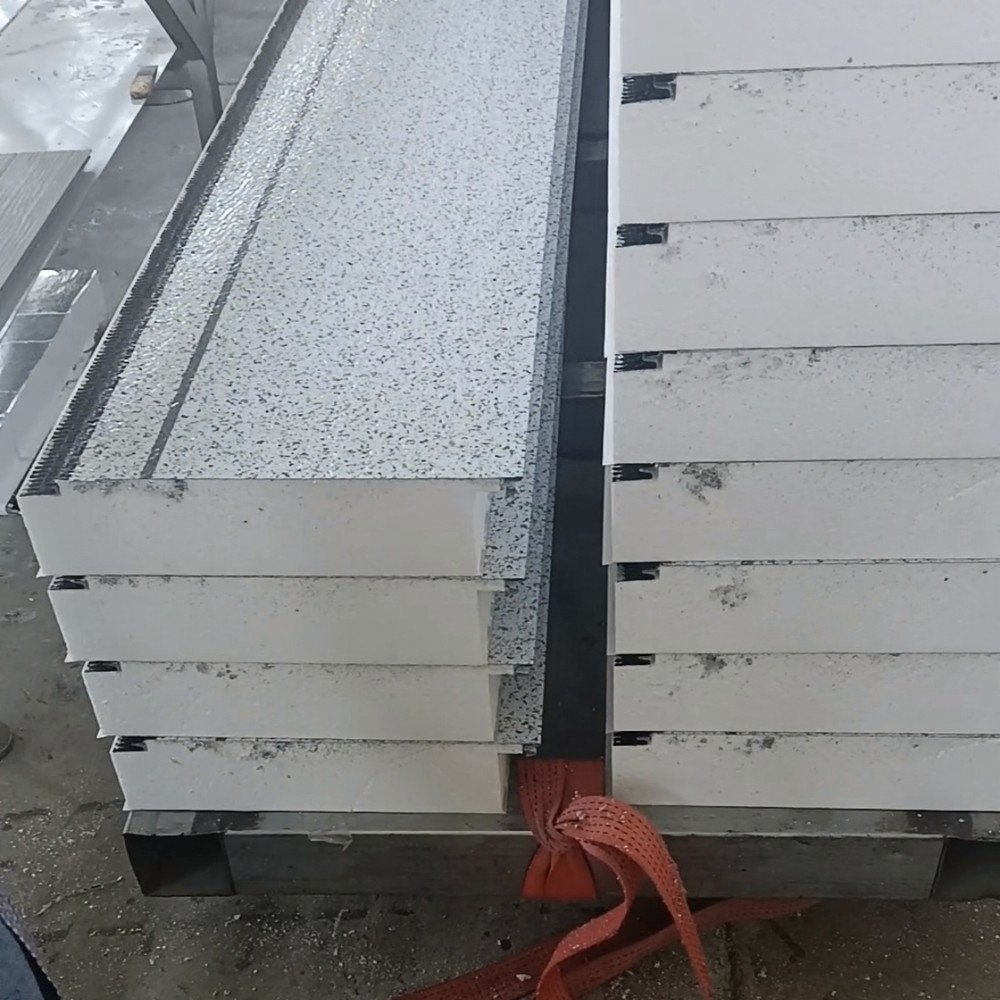
Budget-efficient molded EPS insulated exterior wall panels faced with embossed Al-Zn steel and aluminum foil backing. Tested at 22 kg/m3 density, 0.033 W/(m.K) conductivity, and 2.1% water absorption - ideal for thick 50-100 mm enclosures.
- Economical EPS foam core tested at 0.033 W/(m·K), 22 kg/m³ & 2.1% water absorption
- Available from 16 mm up to 100 mm for budget-focused commercial & agricultural walls
- Same pre-painted Al-Zn embossed faces and interlocking joints as our PU series
Direct Factory · Shandong, China · 10-100 mm PU & EPS · CNAS Class B1 Tested · Free Cut Samples
On this page
Where molded EPS beats rigid PU on project economics
Rigid PU wins on thin 16-25 mm siding where wall space is tight. Once your building allows 50 mm, 75 mm, or 100 mm wall panels – such as agricultural buildings, workshops, budget modular houses, or warehouse offices – molded EPS delivers solid total thermal resistance at a noticeably lower ex-factory price per square meter.
In TECC Report ZJTB3307037563GR (July 2026), our EPS-core exterior metal panels measured 22 kg/m3 density (vs. 18 kg/m3 minimum), 0.033 W/(m.K) thermal conductivity, 118 kPa compressive strength, 2.1% 24-hour water absorption, 0.15 MPa bond strength (core body failure), and Class B1 (D-s1, d0) burning rating with 30.8% oxygen index.
EPS wall panel thickness vs. approximate core R-value
| EPS thickness | Approx. core R-value (@ 0.033 W/m.K) | Equivalent PU thickness | Common building use |
|---|---|---|---|
| 30 mm EPS | ~0.91 m2.K/W | ~18 mm PU | Budget temporary structures, mild-climate walls |
| 50 mm EPS | ~1.52 m2.K/W | ~30 mm PU | Workshops, budget prefab buildings, commercial walls |
| 75 mm EPS | ~2.27 m2.K/W | ~45 mm PU | Heated warehouses, agricultural sheds, northern cabins |
| 100 mm EPS | ~3.03 m2.K/W | ~60 mm PU | High-R economy walls, cool-room enclosures |
Direct manufacturing in Shandong — verified numbers
Jinan Jiye Building Materials Co., Ltd. runs continuous one-step panel forming lines at our Zouping, Binzhou plant. Every panel ships with traceable coil batch records and stamped CNAS lab data.
10–100 mm
PU & EPS core thicknesses (383 mm cover width)
0.020 W/m·K
CNAS-tested PU thermal conductivity at 25°C
100+ Finishes
Embossed wood, brick, stone & fluted coil stock
3,800 m²
Max 16 mm panel loading per 40HQ container
Workshop checkpoints buyers ask to see
From pre-painted Al-Zn coil staging to double-belt curing and export container stuffing, our production line handles panels and matching trims under one roof.
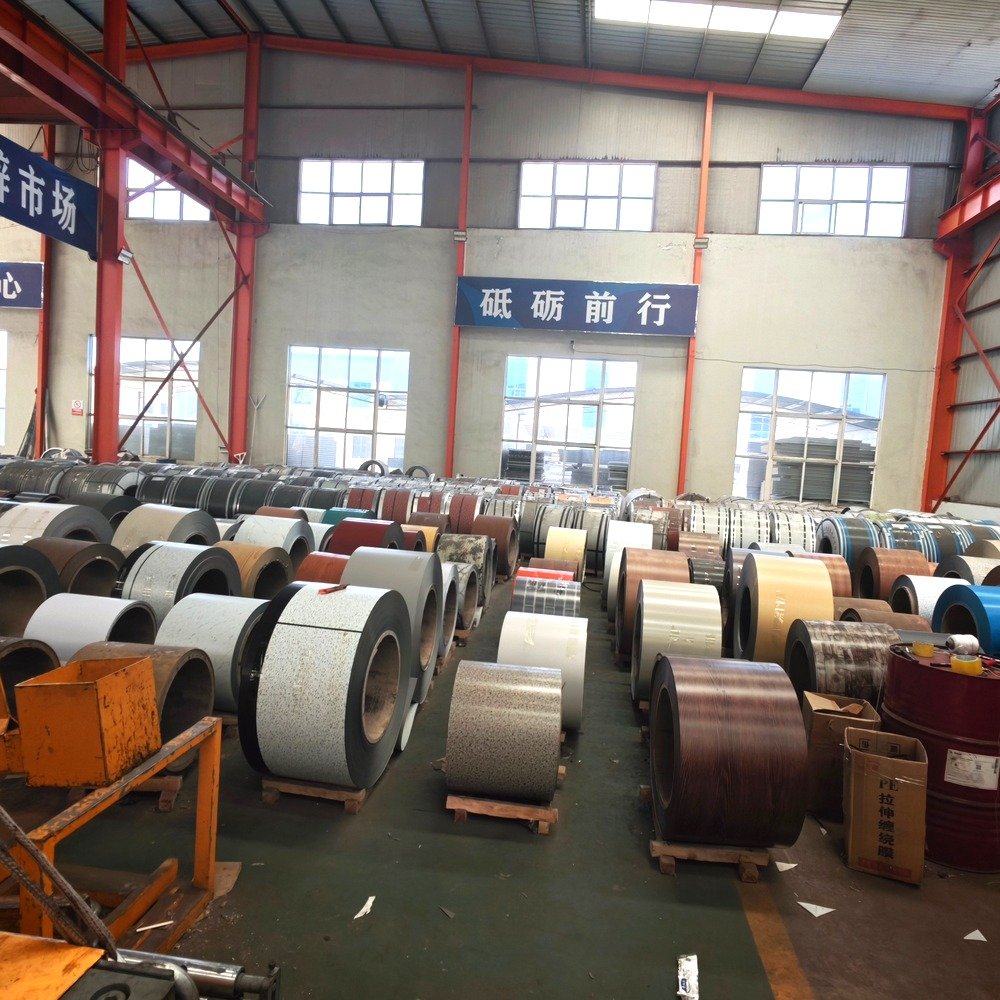
Coil inventory & embossing rollers
Pre-painted Al-Zn alloy steel coils (0.21 mm, 0.23 mm, and 0.27 mm) and 304 stainless steel stock feed dedicated brick, wood grain, fluted, and stone roller dies. Tested coating mass: 105 g/m2 front Al-Zn (min point 92 g/m2). Steel gauges: 0.21 / 0.23 / 0.27 mm (customizable).
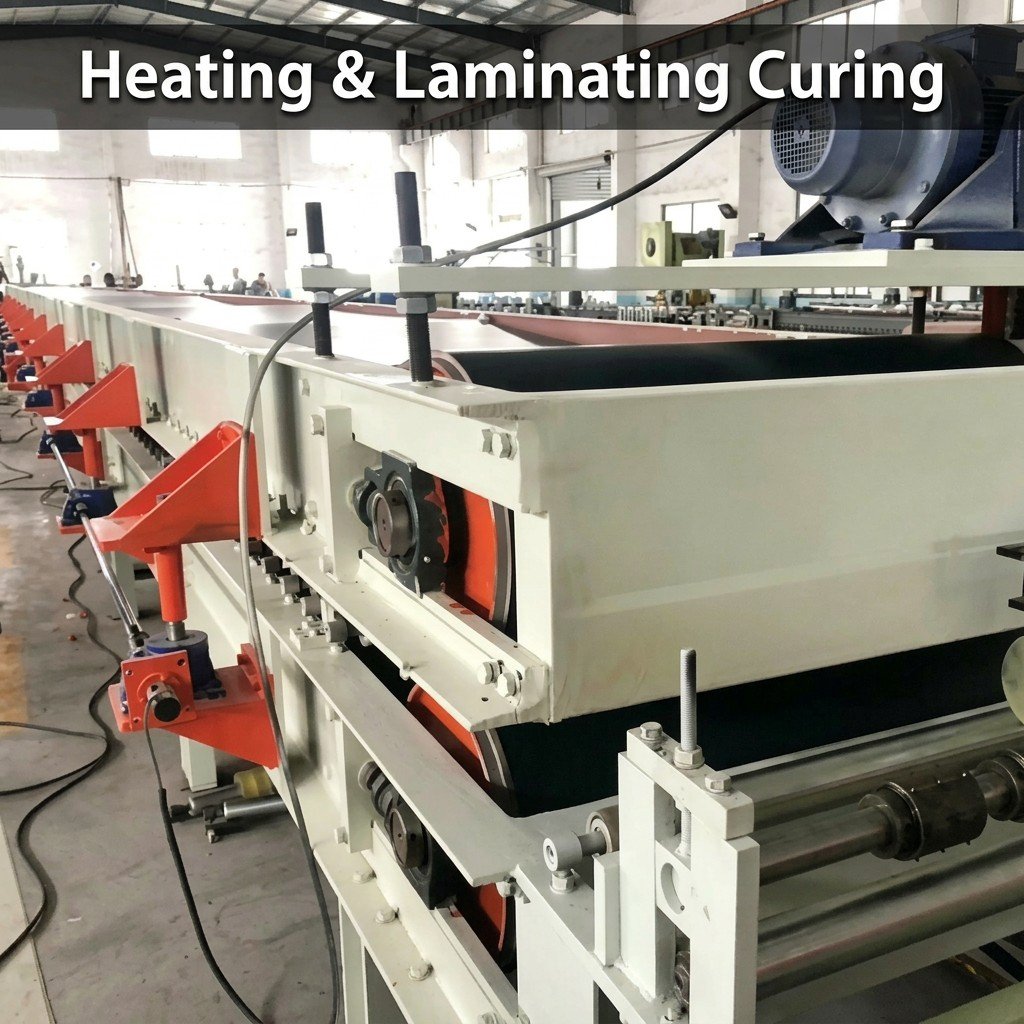
Double-belt heating & curing
Heated laminating belts hold panel flatness while the PU foam expands and bonds to both the embossed steel face and the moisture-barrier foil backing. Measured bond strength: 0.16 MPa (PU) / 0.15 MPa (EPS). Dimension tolerance: Length -1 mm, width +1 mm, thickness +0.5 mm.
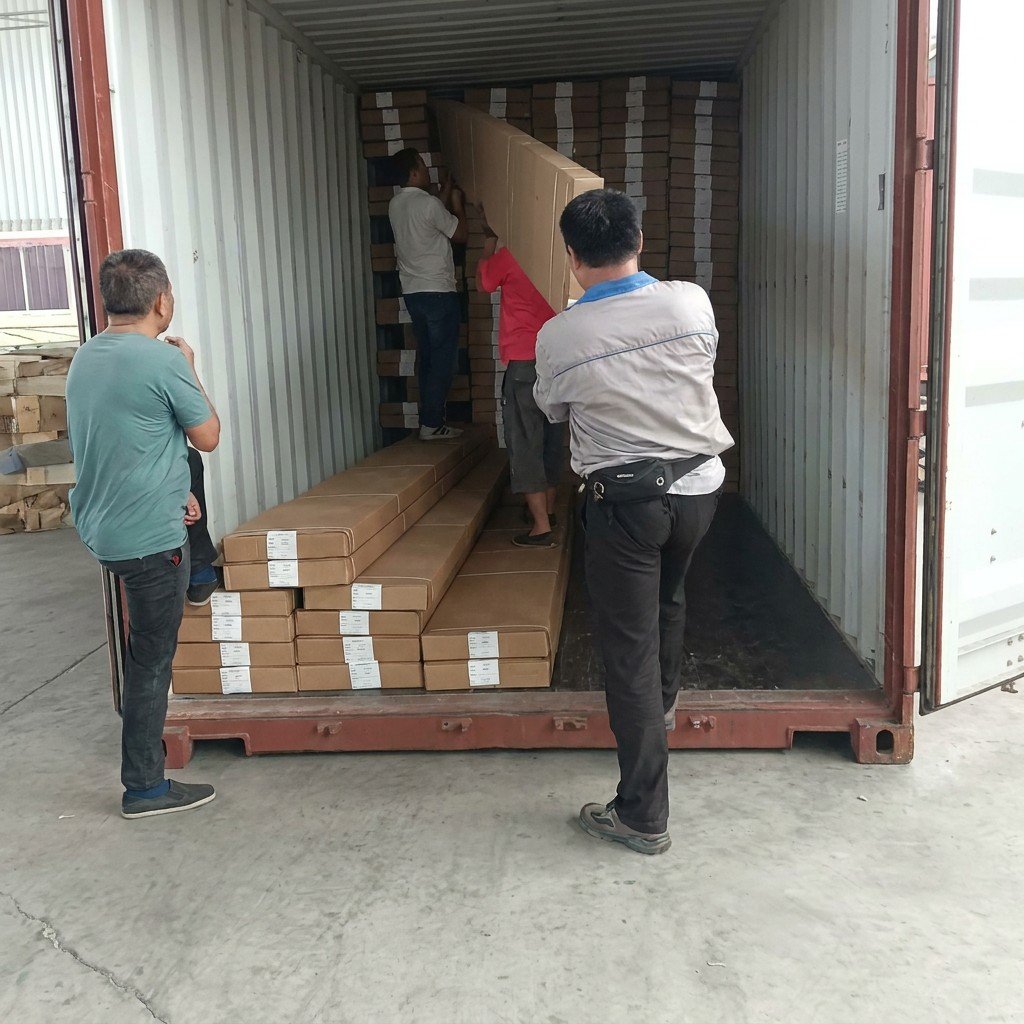
Carton packing & container loading
Standard 16 mm panels pack 10 pieces per labeled export carton (4000 x 420 x 160 mm for 4 m boards) or cut to 2.9 m / 3.8 m / 5.8 m lengths to optimize container cube. 20GP capacity (16 mm): Approx. 1,300 to 1,500 m2. 40HQ capacity (16 mm): Approx. 3,200 to 3,800 m2.
Third-party CNAS / ilac-MRA test summary (Report ZJTB3307037563GR)
Independently measured by Hunan TECC Testing Co., Ltd. (CNAS L23527 / ilac-MRA accredited) on July 10, 2026 using 0.21 mm Al-Zn faced exterior wall panels under GB/T 23932-2025, JG/T 287-2013, and GB 8624-2012. Full 10-page stamped bilingual PDF report available on request.
| Test item | PU core result | EPS core result | Reference standard |
|---|---|---|---|
| Apparent core density | 43 kg/m3 (req >= 38) | 22 kg/m3 (req >= 18) | GB/T 23932-2025 / GB/T 10801.1-2025 |
| Thermal conductivity at 25 C | 0.020 W/(m.K) (req <= 0.024) | 0.033 W/(m.K) (req <= 0.039) | GB/T 23932-2025 / GB/T 10801.1-2025 |
| Compressive strength | 152 kPa (req >= 120) | 118 kPa (req >= 100) | GB/T 23932-2025 |
| 24 h volume water absorption | 2.4% (req <= 4.0%) | 2.1% (req <= 3.5%) | GB/T 23932-2025 / GB/T 10801.1-2025 |
| Metal-to-core bond strength | 0.16 MPa (core failure) | 0.15 MPa (core failure) | JG/T 287-2013 |
| Burning classification & oxygen index | Class B1 (D-s1, d0) / OI 31.2% | Class B1 (D-s1, d0) / OI 30.8% | GB 8624-2012 / GB/T 2406.2 |
| Coating adhesion & impact | Grade 1 / 500 g ball @ 500 mm intact | Grade 1 / 500 g ball @ 500 mm intact | JG/T 287-2013 |
| Acid & alkali resistance (48 h) | No peeling, blistering, or rust | No peeling, blistering, or rust | GB/T 2518-2019 (5% HCl & 5% NaOH) |
EPS insulated wall panel FAQ
Can EPS panels use the same embossed stone, brick, and wood steel faces?
Yes. Both granite-stone, brick, stucco, and wood-grain Al-Zn faces laminate cleanly onto 30-100 mm EPS cores.
Does EPS absorb more water than PU?
In our 24-hour lab immersion test, molded EPS measured 2.1% volume absorption versus 2.4% for PU – both comfortably inside the standard limit when cut ends are enclosed in sealed trims.
Is EPS strong enough for ground-floor commercial walls?
Molded EPS measured 118 kPa compressive strength (vs. 152 kPa for PU). Pairing 50-100 mm EPS with 0.27 mm Al-Zn steel gives sturdy day-to-day wall performance at lower core cost.
Request EPS vs. PU side-by-side container pricing
Tell us your required thickness (30-100 mm), square meters, and destination port – we will quote both EPS and PU so you can compare landed totals.