
INSTALLATION & MOISTURE
How to Prevent Condensation Behind Metal Wall Cladding in Cold and Humid Climates
Nearly every mold or 'sweating wall' complaint on metal siding traces back to skipping a rear ventilated cavity. Here is the clean rainscreen build-up European and North American builders use.
On this page
Short DIY clips frequently show installers screwing insulated metal panels straight against raw plywood sheds or older masonry walls. In dry desert climates that shortcut may survive for years. In damp or cold climates – such as the Netherlands, the UK, northern Italy, Germany, or the northern US – trapping moist indoor air behind vapor-impermeable steel and aluminum foil leads to hidden condensation.
Why condensation forms behind metal cladding
Warm indoor air holds moisture from breathing, cooking, and showers. During cold nights, that moisture migrates outward through timber studs or older mortar joints. When warm humid air hits the cold rear aluminum foil or metal flange without airflow to carry it away, it hits dew point and turns into liquid water droplets.
The proven ventilated rainscreen wall build-up (outside to inside)
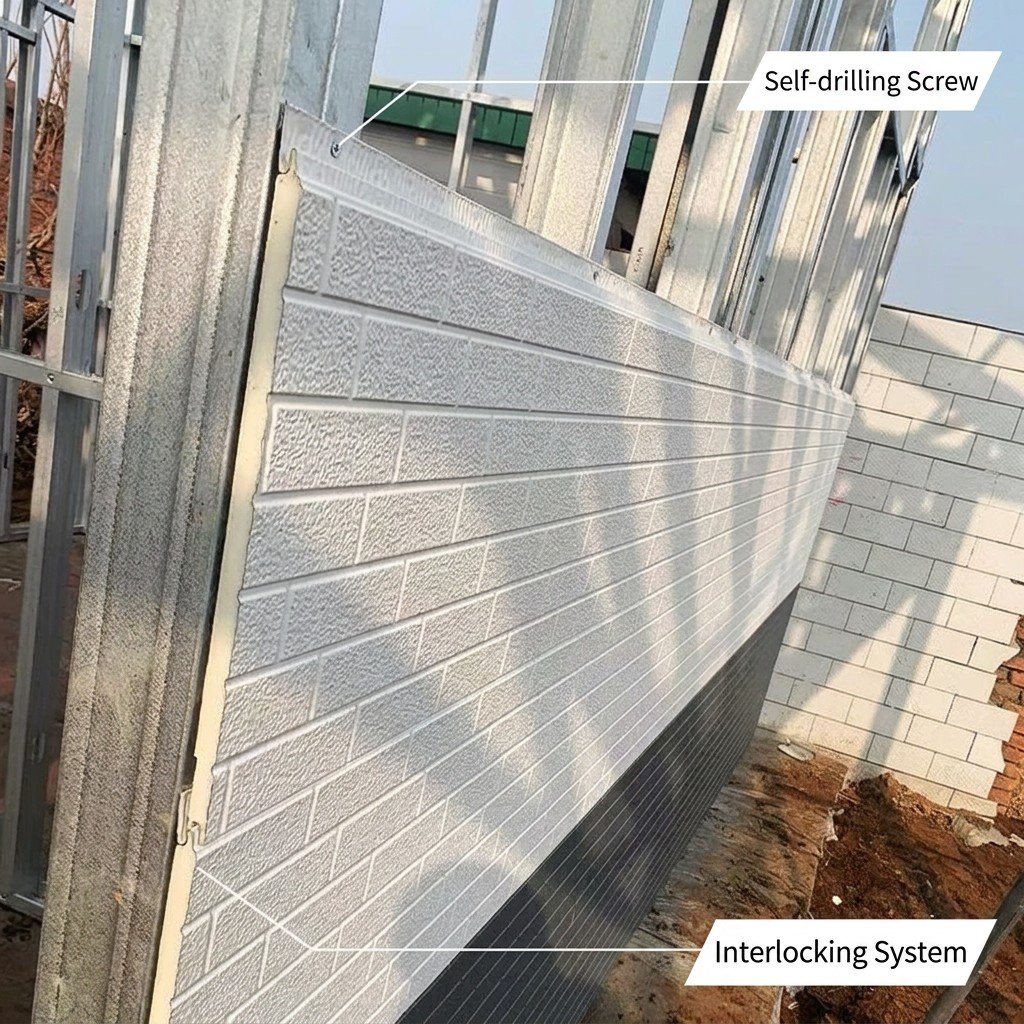
- Jiye 16-50 mm PU insulated metal wall panel (female groove down on horizontal runs).
- 20 to 30 mm vertical ventilation cavity formed by galvanized steel hat-channels or pressure-treated timber battens spaced at 400 to 600 mm centers.
- Screened insect/vent mesh along the bottom starting track and vented eave outlet at the top so natural convection dries the air gap continuously.
- Breathable weather-resistive barrier (WRB / breather membrane) stapled or taped over timber sheathing (lets vapor escape outward while blocking any wind-driven droplets).
- Structural wall frame + interior vapor control layer on heated rooms.
Adjusting ventilation for vertical metal siding
If you run panels vertically, horizontal fixing battens block upward airflow if nailed directly onto the wall. Solve that cleanly with double cross-battening: fix vertical drainage battens first over the breathable membrane, then fix horizontal battens across them to carry the vertical siding screws.
Condensation & moisture FAQ
Do I need battens on an unheated outdoor tool shed?
Even on unheated sheds, thin vertical furring strips keep panels straight and prevent damp plywood sheathing from staying wet against the rear foil.
Does the rear aluminum foil stop condensation by itself?
The foil layer reflects heat and blocks liquid wicking into the PU foam, but it is a vapor barrier – it cannot dry moisture trapped on the wall behind it without an air gap.